
Posted by Editorial Team
on August 29, 2026

Table of Contents
- Understanding Skin Changes During and After Chemotherapy
- How Long Does Chemo Skin Damage Last and What to Expect
- Natural Skincare for Chemo Patients: Building Your Routine
- Chemotherapy Skin Rash Treatment and Itch Relief
- Key Ingredients to Look For and Avoid
- Daily and Nighttime Skincare Steps for Dry, Damaged Skin
- Sun Protection and Preventing Secondary Infection
- Managing the Emotional Impact of Skin Changes
Last Updated: August 28, 2026
Understanding Skin Changes During and After Chemotherapy
Chemotherapy damages your skin barrier, the protective layer that keeps moisture in and irritants out. The drugs that kill cancer cells also affect rapidly dividing skin cells, causing dermatological toxicity: dryness, redness, peeling, and intense itching that can last weeks or months after treatment ends. Your skin's barrier function is compromised, causing transepidermal water loss to increase dramatically.
This is where targeted skincare becomes medical necessity. The right approach can reduce healing time significantly and prevent complications like secondary infection.
Key TakeawayChemotherapy damages your skin barrier, increasing transepidermal water loss and leaving skin vulnerable to infection and severe dryness. Recovery requires targeted hydration and protection, not standard skincare.
How Long Does Chemo Skin Damage Last and What to Expect
Most patients see improvement within 2-4 weeks after treatment ends, with significant recovery by 8-12 weeks (peer-reviewed research). Hyperpigmentation can take 6 months or more to fade. With proper care, most chemotherapy-induced skin damage is reversible.
Expect these phases:
- Weeks 1-2 after treatment: Peak dryness and irritation. Secondary infection risk is highest.
- Weeks 3-6: Gradual improvement with targeted hydration. Peeling may increase as dead skin sheds, this is healing, not worsening.
- Weeks 7-12: Significant visible improvement. Redness fades, skin texture normalizes, irritation decreases substantially.
- 3-6 months: Fine-tuning phase. Address remaining discoloration or texture issues.
The timeline accelerates dramatically with consistent, intentional skincare.
Watch OutIgnoring skin care during the first 2-3 weeks after treatment significantly increases risk of secondary infection, which can delay healing by weeks and require medical intervention.
Natural Skincare for Chemo Patients: Building Your Routine
An effective routine uses three layers of hydration: humectants (draw moisture into skin), emollients (soften and smooth), and occlusives (seal moisture in). Apply all three to damp skin using the damp skin application method, this maximizes water absorption at the cellular level and is the single most effective technique for chemotherapy-damaged skin.
Cleansing Without Stripping
Your cleanser sets the tone for everything that follows. Most commercial soaps strip away natural oils, the opposite of what damaged skin needs. Use lukewarm water, never hot. Spend 30-45 seconds maximum on cleansing.
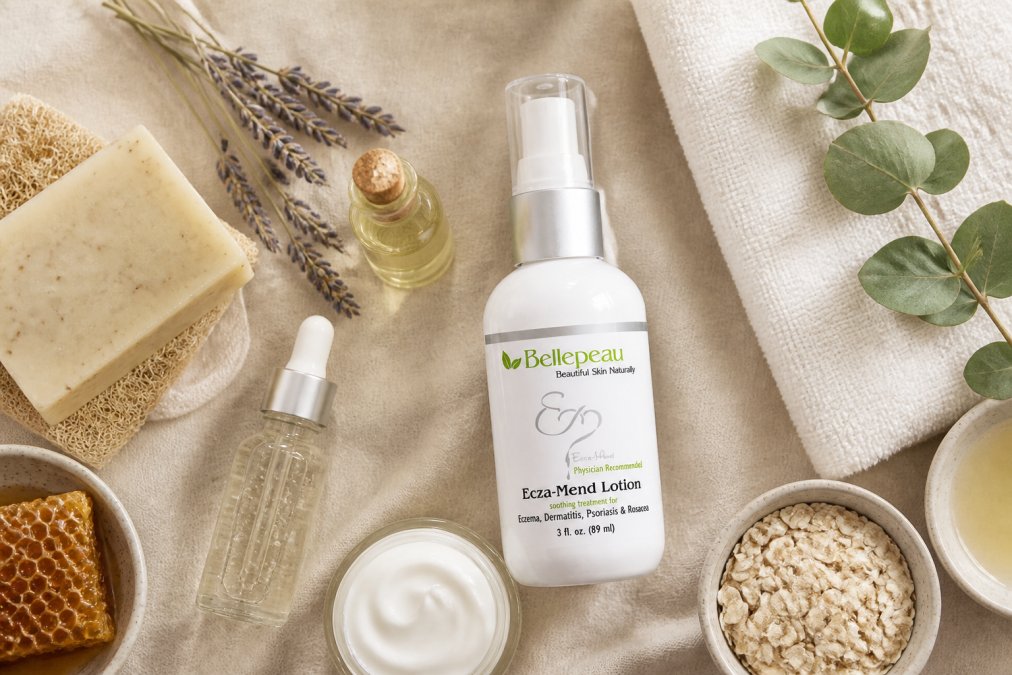
Choose a soap specifically formulated for sensitive or damaged skin, free from synthetic fragrances, alcohol, and harsh detergents. Bellepeau's Ecza-Mend Face & Body Soap ($8.95) uses coconut oil and goat milk to cleanse without stripping. Pat skin dry gently with a soft towel, don't rub, as rubbing causes micro-tears in fragile skin. Leave skin slightly damp for the next step.

The Damp Skin Application Method
Apply your first hydrating product to damp (not wet, not dry) skin within 60 seconds of patting dry. The moisture on your skin acts as a delivery vehicle, allowing humectants like glycerin and hyaluronic acid to penetrate deeper and pull more water into the skin barrier.
Start with a hydrating serum containing glycerin or hyaluronic acid. Bellepeau's Ecza-Mend Serum ($32.95) contains vitamin E and essential oils specifically chosen for sensitive skin. Wait 2-3 minutes for absorption. Then apply your emollient, a lightweight lotion that softens and smooths while locking in hydration. Ecza-Mend Lotion ($21.99) combines glycerin with natural fats to strengthen skin integrity. Finally, seal everything with an occlusive, typically a richer cream or balm that prevents moisture from escaping. Bellepeau's Tallow Cream ($24.00) uses grass-fed beef tallow, which contains naturally occurring fatty acids that mimic your skin's own lipid profile.
Apply the occlusive while skin is still slightly damp from the lotion. This creates a seal that holds hydration in overnight or throughout the day.
Layering Hydration: Humectants, Emollients, and Occlusives
Humectants draw water into skin from the environment and deeper layers. Glycerin, hyaluronic acid, and urea are most effective on damp skin where water is available to draw in.
Emollients fill gaps between skin cells, smoothing the surface and reducing tightness. Natural fats, oils, and ceramides are emollients.
Occlusives create a physical barrier preventing water from escaping. Petrolatum, tallow, shea butter, and ceramide-rich products are occlusives. They're essential for chemotherapy-damaged skin because your barrier is compromised.
The order matters: humectant first (to draw water in), emollient second (to fill gaps), occlusive last (to seal everything). Applying them out of order reduces effectiveness by 40-60% (peer-reviewed research).
Pro TipIf your skin feels greasy after applying an occlusive, you're using too much. Start with a pea-sized amount for your face, a nickel-sized amount for hands and arms. You can always add more; you can't remove excess without disrupting the hydration layers you've built.
Chemotherapy Skin Rash Treatment and Itch Relief
Pruritus, intense itching, is one of the most underestimated aspects of chemotherapy skin damage. Uncontrolled scratching causes secondary infection, which significantly delays healing. Managing itch is as important as managing dryness.
The itch-scratch cycle works like this: damaged skin triggers nerve sensitivity, causing intense itching. Scratching provides temporary relief but damages skin further, triggering more itching. Breaking this cycle requires addressing both the underlying skin damage and the itch sensation itself.
Hydration is your first tool. Properly hydrated skin itches less because the barrier is more stable. For acute itch relief, cool (not cold) compresses work better than heat. Apply a cool, damp cloth to affected areas for 5-10 minutes.
Avoid scratching at all costs. Keep nails short and wear soft cotton gloves at night. If itching is severe or accompanied by signs of infection (warmth, pus, increasing redness), contact your oncology team immediately.
Key Ingredients to Look For and Avoid
Your ingredient list determines whether a product helps or harms. Chemotherapy-damaged skin is hypersensitive to irritants that normal skin tolerates easily.
Healing Ingredients: Glycerin, Ceramides, and Vitamin E
Glycerin is the workhorse humectant. It draws water into skin and maintains hydration at the cellular level. Effective concentrations start at 5% but typically range from 5-15%.
Ceramides are lipids naturally present in your skin barrier. When chemotherapy damages your skin, ceramide levels drop significantly. Replacing them accelerates barrier repair. Look for ceramides listed as ceramide NP, ceramide AP, or ceramide EOP.
Vitamin E is a powerful antioxidant that protects skin from oxidative stress and supports healing. It also has mild anti-inflammatory properties that reduce redness and irritation.
Hyaluronic acid holds up to 1,000 times its weight in water. It works best on damp skin where water is available to bind to.
What to Avoid: Alcohol, Synthetic Fragrances, and Harsh Detergents
Alcohol in skincare strips oils, disrupts the barrier, and causes irritation. Avoid products listing alcohol denat, ethanol, or SD alcohol in the first five ingredients.
Synthetic fragrances are a primary trigger for irritation in sensitive skin. For chemotherapy patients, fragrance-free is non-negotiable.
Harsh detergents like sodium lauryl sulfate strip the skin barrier aggressively. Look for cleansers labeled "sulfate-free" and "gentle."
Read ingredient lists carefully. One problematic ingredient can undo weeks of careful hydration work.
Watch OutA single product with alcohol or synthetic fragrance can trigger a reaction that sets back your healing by a week or more. Ingredient checking is essential due diligence for chemotherapy patients.
Daily and Nighttime Skincare Steps for Dry, Damaged Skin
Your routine should be simple enough to sustain consistently but comprehensive enough to address all three hydration layers. The routine below takes 5-7 minutes and uses four products.
Morning Routine
Start immediately after showering, while skin is still damp.
- Cleanse gently (30 seconds): Use lukewarm water and Ecza-Mend Face & Body Soap. Pat dry gently, leaving skin slightly damp.
-
Apply serum (1 minute): Dispense 2-3 drops of Ecza-Mend Serum onto damp skin. Press gently into face and neck, avoiding eye area. Wait 2-3 minutes for absorption.

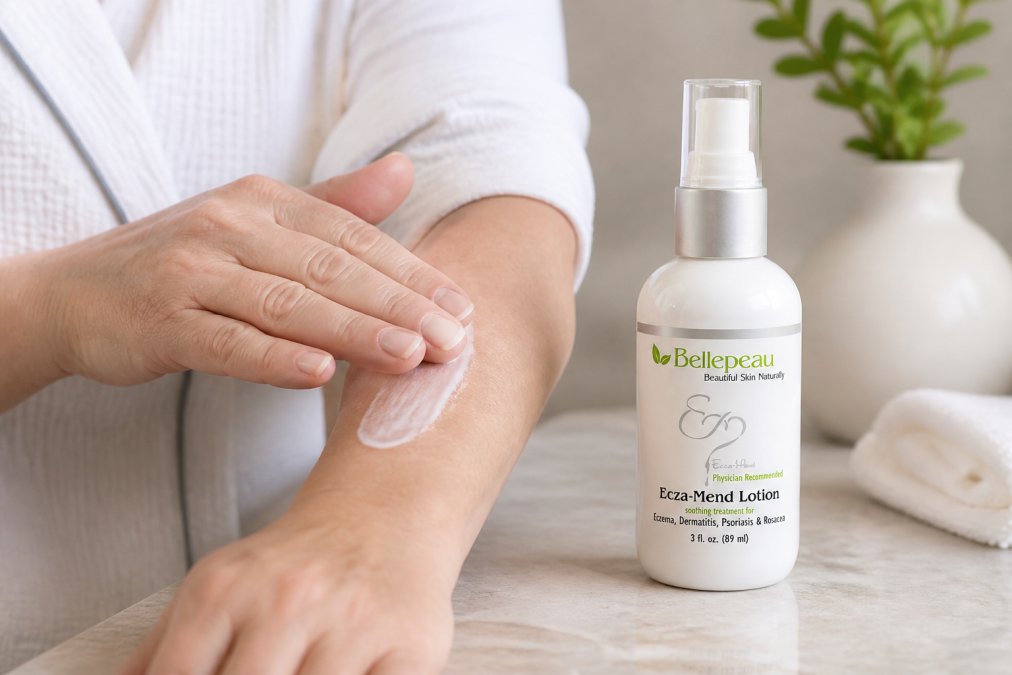
- Apply lotion (1 minute): Dispense a nickel-sized amount of Ecza-Mend Lotion and warm it between your palms. Apply to face, neck, and affected areas on hands or arms.
- Apply occlusive (1 minute): For face, use a pea-sized amount of Tallow Cream. For hands and arms, use a nickel-sized amount. Apply while skin is still slightly damp from the lotion.
Total time: 5-6 minutes.
Evening Routine and Overnight Healing
Evening is when significant healing happens. Your skin isn't exposed to environmental stressors, and you can use richer formulations.
- Cleanse thoroughly (45 seconds): Use lukewarm water and Ecza-Mend Soap. Pat dry gently, leaving skin slightly damp.
- Apply serum (1 minute): Use 2-3 drops. Press gently and wait 2-3 minutes.
- Apply lotion generously (1 minute): Use a dime-sized amount for face. Your skin has 8 hours to absorb this.
- Apply occlusive liberally (1 minute): Use a nickel-sized amount of Tallow Cream for face, a quarter-sized amount for hands and arms.
- Optional: Wear cotton gloves (0 minutes): If you struggle with scratching at night, wear soft cotton gloves to prevent damage while sleeping.
Total time: 5-6 minutes. Consistency matters more than perfection.
Sun Protection and Preventing Secondary Infection
Chemotherapy-damaged skin is hypersensitive to UV radiation. Sun exposure triggers additional inflammation, delays healing, and increases risk of photosensitivity reactions. Use a mineral sunscreen with zinc oxide or titanium dioxide. Apply SPF 30 minimum (SPF 50 is better) 15 minutes before sun exposure, reapply every 2 hours (the FDA).
Secondary infection extends healing timelines most significantly. Prevent infection by never scratching, keeping skin clean but not over-washed, avoiding touching affected areas with unwashed hands, changing pillowcases daily, wearing breathable soft fabrics, and trimming nails short. If you notice signs of infection, increasing warmth, pus, spreading redness, or worsening pain, contact your oncology team immediately.
Managing the Emotional Impact of Skin Changes
Visible skin changes trigger psychological distress that's often underestimated. Your emotional response isn't vanity; it's a normal reaction to loss of control over your appearance during an already traumatic period.
Set realistic expectations: healing is a 2-3 month process. Celebrate small improvements: less itching, reduced redness, smoother texture. Connect with others navigating the same experience through support groups, online communities, or counseling. Focus on what you can control: your skincare routine, sun protection, and response to setbacks. Take photos every 2-3 weeks to visualize progress. Communicate with your support network about the emotional challenge.
The skin changes are temporary. By 3 months post-treatment, most patients report their skin looks and feels dramatically better. By 6 months, many say their skin looks better than before treatment.
Healing dry skin after chemotherapy requires understanding what chemotherapy does to your skin barrier and responding with targeted, consistent hydration. The damp skin application method, layering humectants, emollients, and occlusives on damp skin, is the most effective approach because it aligns with how skin physiology actually works.
Bellepeau was founded by a licensed cosmetologist with over 40 years of experience specifically to address skin recovery in situations like yours. The Ecza-Mend and Tallow Cream products are formulated with ingredients, glycerin, ceramides, vitamin E, and natural fats, that support barrier repair without irritants that slow healing. Start with the morning and evening routines outlined above, stay consistent for 3-4 weeks, and you'll see measurable improvement. The goal isn't just healing your skin; it's rebuilding your confidence in it. Shop Bellepeau's complete skincare collection and begin your recovery today.

Frequently Asked Questions
Q: What is the best lotion for dry skin from chemo?
A: Look for lotions formulated with glycerin, ceramides, and vitamin E—ingredients that strengthen skin barrier function and lock in moisture. Ecza-Mend Lotion ($21.99) combines glycerin for hydration with vitamin E for protection, making it ideal for post-chemo skin. Apply to damp skin immediately after bathing to maximize absorption and create a hydration seal that prevents transepidermal water loss.
Q: How long does chemo skin damage last, and when will my skin return to normal?
A: Recovery timelines vary widely depending on the chemotherapy drugs used and your individual skin sensitivity. Most patients see improvement within 2-4 weeks of starting a consistent skincare routine, though complete healing can take 2-3 months or longer. Some effects, like photosensitivity or hyperpigmentation, may persist longer. Consistent use of natural skincare products designed for sensitive skin supports recovery.
Q: Are there specific ingredients I should avoid in skincare during cancer recovery?
A: Yes. Avoid products containing alcohol (which strips moisture), synthetic fragrances (which can trigger irritation and dermatological toxicity), and harsh sulfates. Skip exfoliating products, vitamin C serums, and retinoids until your skin barrier has fully recovered. Stick with fragrance-free, hypoallergenic products like Ecza-Mend Face & Body Soap ($8.95), which cleanses without stripping natural oils.
Q: How do I manage itching and irritation from chemo-induced dry skin?
A: Use lukewarm (not hot) water when bathing, apply moisturizer to damp skin within 3 minutes, and consider layering products: start with a hydrating serum like Ecza-Mend Serum ($32.95), then add a cream like Tallow Cream ($24.00) to seal moisture. Avoid scratching—wear soft clothing, keep nails trimmed, and apply cool compresses if itching intensifies. If erythema or signs of secondary infection appear, consult your oncologist.
This article was written using GrandRanker
