
Posted by Editorial Team
on August 29, 2026

Table of Contents
- What Causes Eczema Flare-Ups and Why Texture Matters
- Key Ingredients to Look for in Non-Greasy Natural Eczema Creams
- Ingredients to Avoid in Eczema Products
- Understanding Ointments, Creams, and Lotions: Which Is Non-Greasy
- Best Practices for Eczema Skincare and Application
- Sensory Texture Guide and Layering Protocols
- Natural Remedies vs. Budget: Finding Your Balance
- Conclusion
Last Updated: August 29, 2026
What Causes Eczema Flare-Ups and Why Texture Matters
Eczema flare-ups occur when your skin's protective barrier breaks down, allowing moisture to escape and irritants to penetrate deeper into the skin (the NIH). This condition, called transepidermal water loss, leaves skin dry, inflamed, and intensely itchy. Understanding what triggers your specific flare-ups is the first step toward managing them effectively.
Common triggers include harsh soaps, synthetic fragrances, extreme temperatures, stress, and certain fabrics. But here's what many people overlook: the texture of your skincare products matters as much as their ingredients. A heavy ointment might feel suffocating on your face, while a thin lotion won't provide enough occlusive protection for severely dry patches. Finding a non greasy natural eczema cream that matches your skin's actual needs changes everything.
At Bellepeau, the most common complaint is about the sensory experience. People describe feeling trapped under greasy residue, which triggers anxiety and scratching. That's why we focus on formulations that hydrate without that heavy, suffocating feeling. Your skin barrier needs reinforcement through ceramides, humectants like glycerin, and emollients that absorb properly. The texture determines whether you'll actually use the product consistently, and consistency is non-negotiable for eczema management.
The itch-scratch cycle is particularly brutal because scratching further damages your skin barrier, leading to more flare-ups. Breaking that cycle requires a product that feels comfortable enough to apply without hesitation, absorbs within minutes, and delivers real relief.
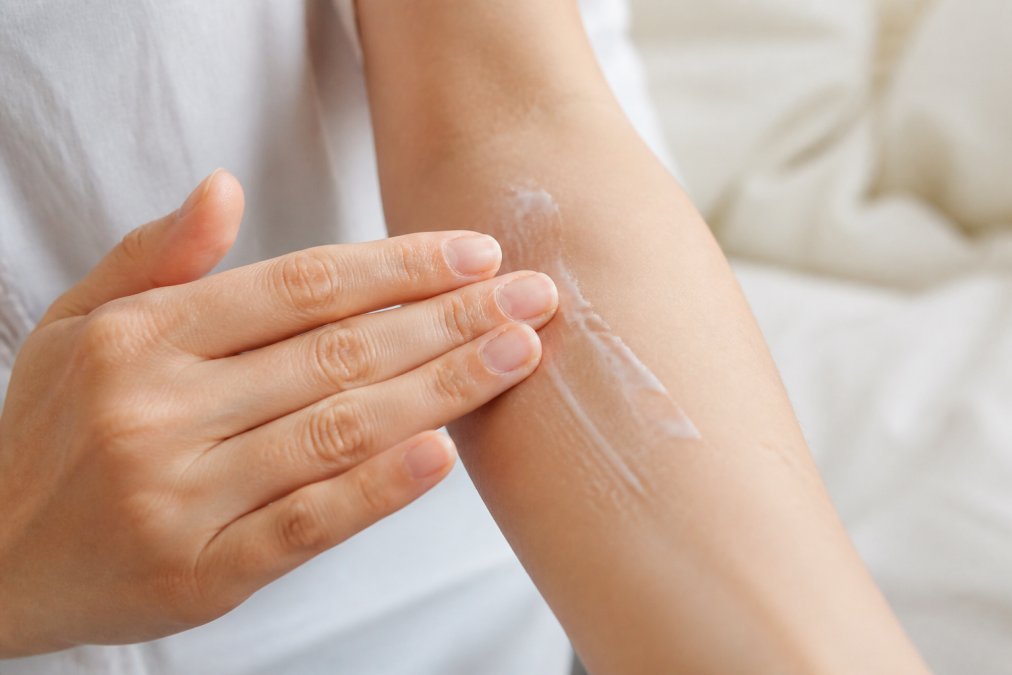
Key Ingredients to Look for in Non-Greasy Natural Eczema Creams
The best non-greasy natural eczema cream contains a strategic blend of three ingredient categories: humectants, emollients, and occlusives. Each plays a distinct role in restoring skin barrier function without creating that heavy, suffocating sensation.
Humectants like glycerin and hyaluronic acid draw moisture into the skin from the environment and from deeper skin layers. Glycerin specifically has been shown to improve skin hydration retention when applied to slightly damp skin, making it essential in any non-greasy formula (peer-reviewed research).
Emollients fill gaps between skin cells and smooth the surface. Natural options include plant oils like jojoba, coconut oil, and shea butter. The best non-greasy natural eczema creams use emollients that absorb within five to ten minutes rather than leaving a visible residue.
Occlusives seal moisture into the skin by creating a protective barrier. Beeswax, plant-based waxes, and natural fats serve this function. The trick is balancing occlusive strength with absorbency; too much and your skin feels suffocated; too little and moisture escapes within hours.
Natural Ingredients for Itchy Skin Relief
Ceramides are lipids that naturally occur in your skin barrier. When eczema damages these lipids, your skin loses its ability to retain moisture. Look for plant-derived ceramides or formulas that support lipid replenishment.
Vitamin E functions as an antioxidant, protecting skin cells from oxidative stress and supporting the skin's natural healing process. Natural vitamin E from plant sources integrates more readily into the skin's protective mechanisms.
Essential oils like chamomile and lavender offer anti-inflammatory properties that reduce redness and soothe irritation. However, essential oils must be properly diluted; concentrated versions can trigger reactions in sensitive skin. The best formulations use essential oil extracts rather than pure oils.
Colloidal oatmeal has been used for centuries to calm eczema-prone skin. It contains compounds that reduce inflammation and provide gentle exfoliation without harsh scrubbing.
Ingredients to Avoid in Eczema Products
Synthetic fragrances are the single most common trigger for eczema flare-ups (the American Academy of Dermatology). They penetrate into skin layers before dispersing. Look for fragrance-free formulations or products scented only with essential oil extracts.
Parabens are preservatives that extend shelf life but have been linked to skin sensitivity in people with compromised barriers. Avoiding parabens is a straightforward way to reduce potential irritants in your non greasy natural eczema cream.
Sulfates are harsh detergents that strip natural oils from skin. For eczema management, sulfate-free products prevent the initial barrier damage that triggers flare-ups.
Petroleum-derived ingredients like mineral oil and petrolatum create an occlusive barrier but are comedogenic and can feel greasy. Natural alternatives like plant-based waxes and tallow provide similar barrier protection with better absorbency.
Alcohol denatures and can severely dry skin. Check ingredient lists for alcohol placement; if it appears in the top five ingredients, it's likely too concentrated for eczema-prone skin.
Understanding Ointments, Creams, and Lotions: Which Is Non-Greasy
The difference between these three formulations comes down to water and oil ratios, which directly affects greasiness and absorption rates.
Ointments are 80% oil and 20% water. They're the most occlusive but also the greasiest. They excel at sealing moisture into severely damaged skin but feel suffocating on the face and don't absorb quickly.
Creams are roughly 50% oil and 50% water, creating an emulsion that balances occlusion with absorbency. This is where the best non greasy natural eczema cream sits. Creams absorb within ten to fifteen minutes, leaving skin hydrated without visible residue.
Lotions are 10% oil and 90% water. They're the lightest and least greasy but provide minimal barrier protection. Lotions work well for maintenance on already-healthy skin but often fail during active flare-ups.
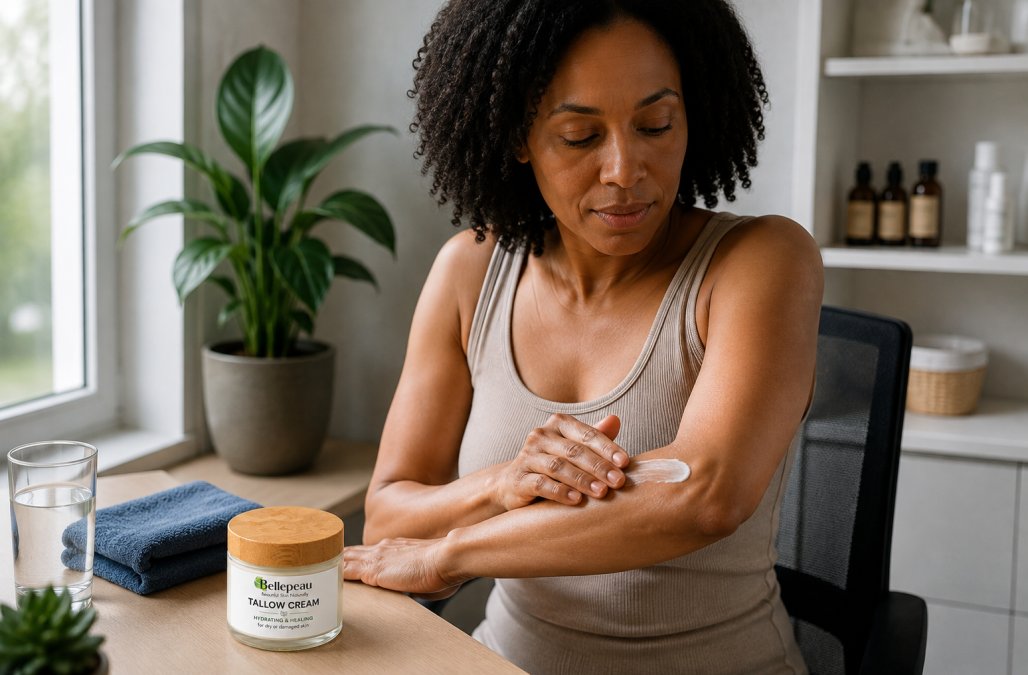
Best Practices for Eczema Skincare and Application
Start with a gentle, sulfate-free cleanser that removes dirt and irritants without stripping natural oils. Limit cleansing to twice daily to avoid over-washing, which damages the barrier.
Pat skin dry gently with a soft towel. Apply your non-greasy natural eczema cream within three minutes of cleansing while skin is still slightly damp. This timing is critical. Damp skin allows humectants to draw moisture deeper into the epidermis, and existing water on your skin surface helps emollients distribute evenly without creating a heavy residue.
Use your fingertips or a clean applicator to apply the cream in gentle, downward strokes. Avoid rubbing or massaging, which can irritate sensitive skin. A little goes a long way; most people use too much product. Start with a pea-sized amount for your face and a nickel-sized amount for each body section.
Allow the cream to absorb fully before dressing or going to bed. Most quality formulations absorb within ten to fifteen minutes.
How to Apply Moisturizer for Eczema Absorption
Pat rather than rub. Rubbing creates friction that irritates already-sensitive skin and can trigger the itch-scratch cycle. Patting allows the product to settle into skin without mechanical stress.
Apply to damp skin, not soaking wet. The ideal state is when your skin feels cool and slightly moist. Damp skin helps emollients spread evenly, reducing the amount needed and preventing over-application.
Work in sections: face, neck, chest, arms, hands, legs, feet. This systematic approach ensures you don't miss areas and helps you develop consistent muscle memory.
For severely affected areas like hands, elbows, and knees, consider a two-layer approach. Apply your first layer and let it absorb for five minutes. Then apply a second, lighter layer. This method delivers more barrier support without the heavy, greasy feeling of applying one thick layer.
Sensory Texture Guide and Layering Protocols
Texture preferences are deeply personal, but they're also predictable once you understand what creates different sensory experiences.
Fast-absorbing creams (under 10 minutes) typically contain lighter emollients like jojoba oil or plant-derived waxes. They leave a matte or satin finish and feel almost weightless. If you have sensory sensitivities or dislike greasy textures, this is your category.
Medium-absorbing creams (10-20 minutes) balance occlusion and sensory comfort. Most people find this category ideal because it delivers real barrier protection without the suffocating feeling of heavier products.
Slow-absorbing creams (20+ minutes) are heavier and more occlusive. These feel noticeably richer on skin and work well for severe flare-ups or nighttime use.
Layering protocols help you customize barrier support without overwhelming your skin. Start with your lightest hydrating product and let it absorb for three to five minutes. Then apply your non-greasy natural eczema cream. For nighttime, you can add an additional layer after your cream absorbs. Your skin repairs itself during sleep, so heavier products are more tolerable at night.
Natural Remedies vs. Budget: Finding Your Balance
The tension between efficacy and cost is real. Premium natural skincare costs more than mass-market alternatives, but cheap products often contain irritating fillers that trigger flare-ups.
A quality non greasy natural eczema cream typically costs between fifteen and forty dollars per container. Calculate cost-per-use rather than cost-per-container. A forty-dollar cream used twice daily lasts roughly four to six weeks, which breaks down to less than two dollars per day.
Natural remedies like oatmeal baths, coconut oil applications, and chamomile compresses offer supplementary relief but rarely replace a quality moisturizer for chronic eczema. These work best as complementary treatments.
Bellepeau's Ecza-Mend product line specifically addresses this balance. The Ecza-Mend Tallo Cream at $24.00 provides lightweight hydration for maintenance phases, while the Ecza-Mend Serum at $32.95 delivers concentrated barrier support during flare-ups. The Ecza-Mend Face & Body Soap at $8.95 completes the routine with a gentle cleanser that doesn't strip natural oils. Together, these products create a complete eczema management system. The founder's forty years of cosmetology experience means the formulations are genuinely designed for eczema-prone skin.
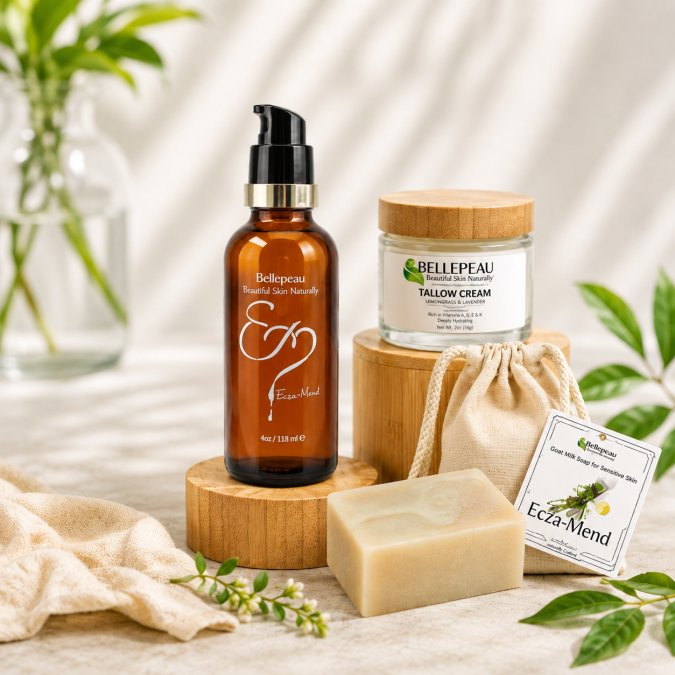
Ecza-Mend Collection
Pro TipApply your non-greasy natural eczema cream within three minutes of cleansing while skin is still slightly damp. This timing maximizes humectant absorption and prevents the product from feeling greasy because existing water on your skin helps emollients distribute evenly.
Conclusion
Managing eczema requires consistency, the right texture profile, and formulations that actually absorb without leaving greasy residue. The best non-greasy natural eczema cream balances ceramides, humectants, and emollients in proportions that repair your skin barrier while feeling comfortable enough to use twice daily. Avoid synthetic fragrances, parabens, and sulfates that trigger flare-ups, and apply your moisturizer to damp skin within three minutes of cleansing for maximum absorption.
The challenge with chronic eczema isn't finding products, it's finding products that work and feel tolerable enough to use consistently. Bellepeau's Ecza-Mend line delivers both. Formulated by a licensed cosmetologist with four decades of experience, these products combine ceramides for barrier repair, glycerin for deep hydration, and natural plant oils that absorb without greasiness. Start with the Ecza-Mend Lotion for daily maintenance, add the Ecza-Mend Serum during flare-ups, and support your routine with the gentle Face & Body Soap. Your skin barrier will thank you. Shop Bellepeau's Ecza-Mend collection and experience the difference consistency and proper formulation make.

Frequently Asked Questions
Q: What makes a non-greasy natural eczema cream different from regular moisturizers?
A: Non-greasy natural eczema creams use lightweight emollients and humectants instead of heavy occlusive oils. They contain ingredients like ceramides and glycerin that hydrate and repair the skin barrier without leaving a greasy residue. Many also include anti-inflammatory botanicals to reduce redness and soothe irritation, making them ideal for sensitive skin that reacts poorly to thick formulations. Products like Ecza-Mend Lotion ($21.99) balance hydration with absorbency, delivering moisture without the heavy feel.
Q: How long does it take to see results from natural eczema creams?
A: Most people notice initial relief from itching and redness within 2-4 weeks of consistent use. Significant improvements in skin texture and barrier repair typically appear after 6-8 weeks. Results depend on flare-up severity, application frequency, and ingredient compatibility. Real customers using Bellepeau's Ecza-Mend products reported visible improvements in discoloration and skin appearance within weeks when applied twice daily. Consistency matters more than speed—using your chosen cream regularly yields better outcomes than sporadic application.
Q: Can natural eczema creams replace prescription medications?
A: Natural creams work best as maintenance and prevention tools rather than replacements for severe flare-ups requiring prescription strength. They excel at managing mild to moderate eczema, supporting skin barrier repair, and reducing the frequency of flare-ups. If you have severe eczema or are recovering from treatments like chemotherapy, consult your dermatologist before switching from prescribed medications. Many people successfully use natural creams alongside prescriptions during healing phases or as a long-term maintenance strategy after flare-ups subside.
Q: Which natural ingredients are most effective for soothing eczema?
A: Ceramides, glycerin, and vitamin E are the most research-supported natural ingredients for eczema relief. Ceramides repair the skin barrier and reduce transepidermal water loss. Glycerin acts as a humectant, drawing moisture into the skin. Vitamin E provides antioxidant protection and reduces inflammation. Essential oils like lavender and chamomile offer additional soothing properties. Ecza-Mend Serum ($32.95) combines vitamin E with essential oils for targeted relief, while Ecza-Mend Lotion includes glycerin and natural fats for comprehensive barrier support. These ingredients work together to address root causes of eczema discomfort.
This article was written using GrandRanker
